
Beginner's Guide
How to Go Ice Fishing in Colorado: A Beginner's Guide to Your First Trip
From getting your license to drilling your first hole — everything a Colorado angler needs to know.
By IceCast Safety Team · September 29, 2026
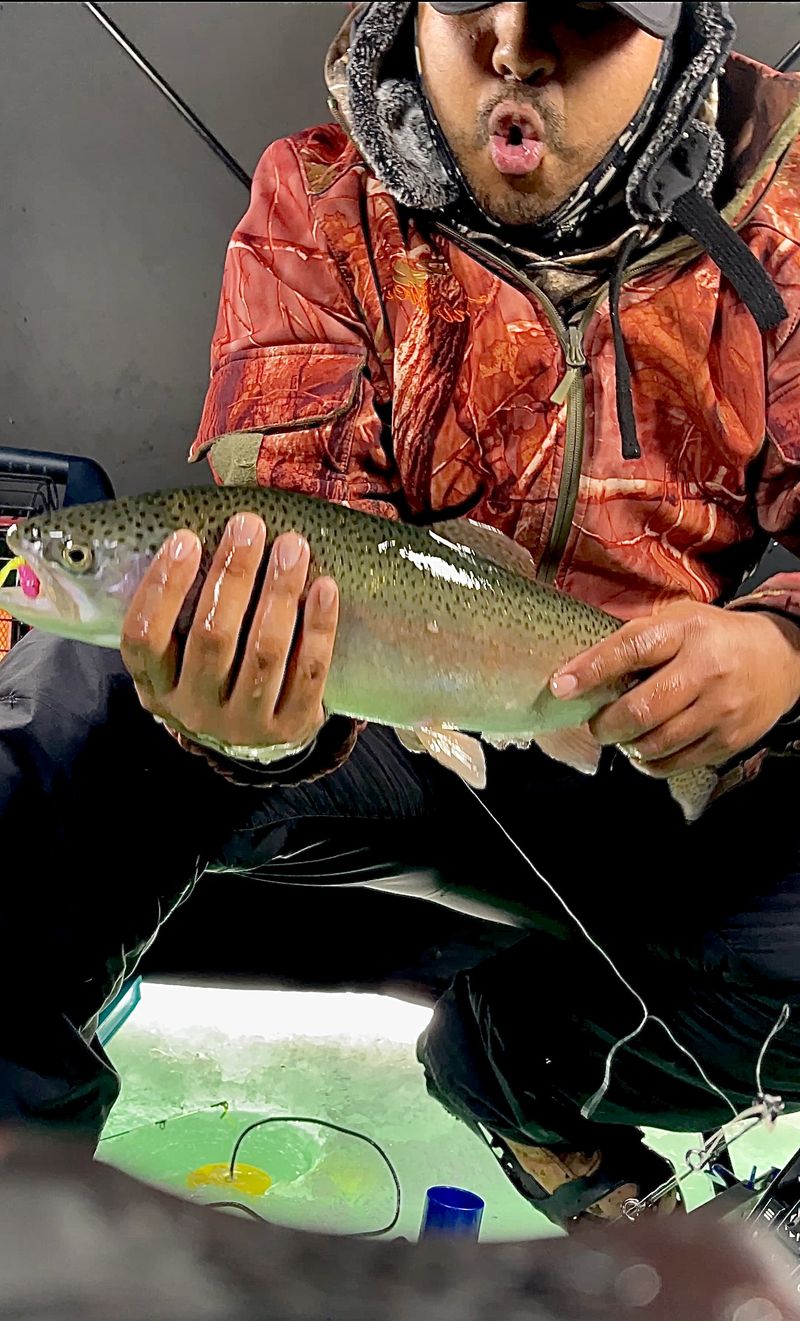
There's a moment every ice angler remembers: the rod tip twitches, the line goes heavy, and a rainbow trout slides up through a hole you drilled yourself. Ice fishing in Colorado is legal, affordable, and open to beginners — you don't need a boat, a guide, or years of experience to get there.
This guide explains how to go ice fishing in Colorado from start to finish. The first half covers the regulatory side: licenses, bag limits, and which waters allow ice fishing. The second half is the hands-on process: the 9 steps from couch to ice, what happens under your hole, and a simple plan for your first day.
This is the starting point. When you're ready to shop, our Ice Fishing Gear Guide 2026–2027 covers every category of equipment, and our guide to ice fishing safety gear explains the four items that protect you if the ice fails.
Do You Need a Fishing License to Ice Fish in Colorado?
Yes. Colorado requires a fishing license for every angler 16 and older, including on the ice. Anglers 15 and under fish free and can keep a full bag limit without a license.
Colorado Parks and Wildlife (CPW) lists these 2026–27 fishing license prices:
- Resident adult annual (ages 18–63): $44.87
- Resident youth annual (ages 16–17): $12.96
- Resident senior annual (ages 64+): $12.96
- Resident one-day: $18.07 (additional days $9.13 each)
- Nonresident annual: $124.01
- Nonresident five-day: $41.04 — a good fit for visitors trying ice fishing for the first time
- Nonresident one-day: $21.90 (additional days $9.13 each)
- Second-rod stamp: $14.24 — required to fish a second line, including a tip-up
Anglers ages 18–64 also need a $12.76 Habitat Stamp once per year. One-day and additional-day license buyers are exempt from the Habitat Stamp for their first two daily licenses.
Annual licenses are valid from March 1 through March 31 of the following year (13 months). A license bought in December 2026 for ice fishing expires on March 31, 2027. You can buy a license online, by phone, or at hundreds of sporting goods and retail stores, and carry it on your phone in the myColorado app. Prices change each license year — check current Colorado fishing license prices on the CPW website.
What Are Colorado's Trout Bag Limits?
Colorado's statewide trout bag limit is 4 trout per day, with a possession limit of 8. The 4-fish limit covers trout, arctic char, grayling, salmon (except kokanee), and mountain whitefish combined.
Rainbow, brown, cutthroat, and brook trout are the most common Colorado trout for ice fishing. Many individual waters override the statewide limit with reduced bag limits, size limits, or catch-and-release rules. Lake Granby, for example, has its own lake trout limit. Always look up the specific lake in the CPW Colorado Fishing Brochure before you go.
Bag limits tell you what you can keep; the ice decides whether you can get there safely. Before you plan a trip, see what 4 inches of ice can hold, by activity.
Where Can You Ice Fish in Colorado?
Most Colorado lakes and reservoirs allow ice fishing once they freeze safely. Some waters prohibit ice fishing entirely, and others allow only portable shelters or close during certain months. These rules are listed water-by-water in the CPW Fishing Brochure.
Popular Colorado ice fishing lakes include Lake Granby, Dillon Reservoir, Taylor Park Reservoir, Williams Fork Reservoir, and Eleven Mile Reservoir. Each freezes on its own schedule. Our breakdown of 5 well-known Colorado ice fishing lakes and their historical freeze data shows how differently they behave. To find other waters near you, use CPW's Colorado Fishing Atlas.
There is no fixed ice fishing season in Colorado. Most waters are open to fishing year-round, so the ice season starts whenever a given lake grows safe ice and ends when that ice weakens. Always check current ice conditions and the lake's regulations before you head out.
How to Go Ice Fishing in Colorado: 9 Steps to Success
Here's the complete process, from planning to packing out:
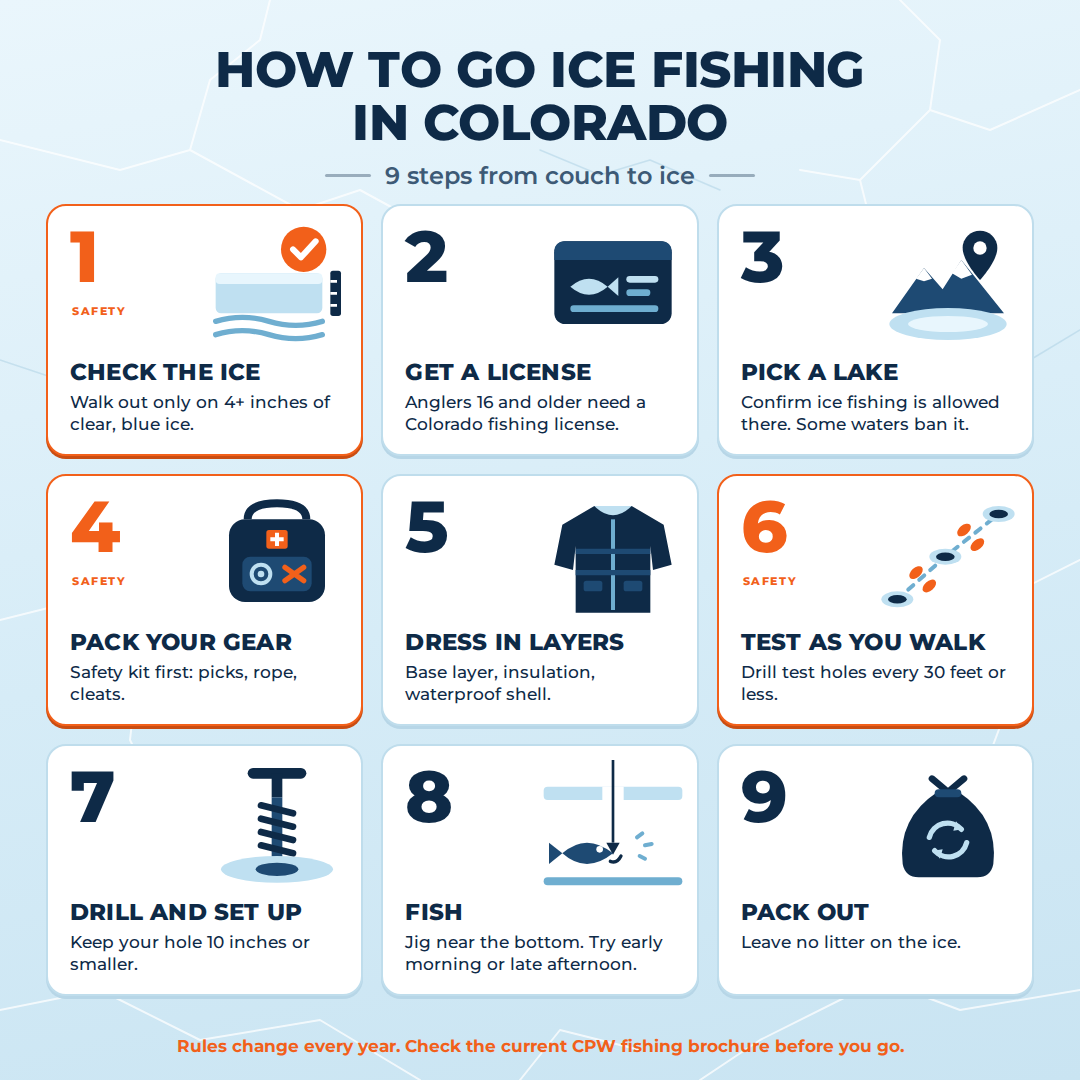
- Check the ice. Walk out only on 4 or more inches of clear, blue ice.
- Get a license. Anglers 16 and older need a Colorado fishing license.
- Pick a lake. Confirm ice fishing is allowed there. Some waters ban it.
- Pack your gear. Safety kit first: ice picks, rope, and cleats.
- Dress in layers. Base layer, insulation, and a waterproof shell.
- Test as you walk. Drill test holes every 30 feet or less.
- Drill and set up. Keep your hole 10 inches or smaller, then set up your shelter.
- Fish. Jig near the bottom. Try early morning or late afternoon.
- Pack out. Leave no litter on the ice.
The 9 steps fall into three phases:
- Steps 1–3: Plan. Confirm the ice, your license, and your lake before you leave home.
- Steps 4–6: Prepare. Pack safety gear first, dress for the cold, and test the ice as you walk out.
- Steps 7–9: Fish. Drill your hole, set up your shelter, fish, and leave the ice cleaner than you found it.
What Gear Do You Need for Ice Fishing in Colorado?
A beginner's Colorado ice fishing setup comes down to four groups of gear:
- Safety: ice picks, a life jacket or float suit, a throw rope, and ice cleats.
- Drilling and testing: an ice auger for holes and a spud bar for probing the ice ahead of you.
- Fishing: a short ice rod and reel, light line, small jigs, and bait.
- Shelter and comfort: a portable ice fishing hut, a bucket or seat, and warm, waterproof layers.
See our complete beginner's gear checklist for details on rods, reels, augers, and comfort gear.
What Safety Gear Can't You Skip?
Three items are non-negotiable on Colorado ice: ice picks, a life jacket or float suit, and a spud bar.
- Ice picks hang around your neck so you can grip the ice edge and pull yourself out if you fall through.
- A life jacket or float suitkeeps you afloat while you self-rescue. Wear it; don't pack it.
- A spud bar tests the ice ahead of every step. If it breaks through, turn back the way you came.
Get the deep dive on ice picks, cleats, spud bars, and self-rescue technique in our ice fishing safety gear post.
What Happens Below the Ice: The Hole Setup
CPW's ice fishing tips for trout point beginners to semi-shallow water 8–12 feet deep, near points or where the bottom drops off. Start with your bait 6–10 inches off the bottom.
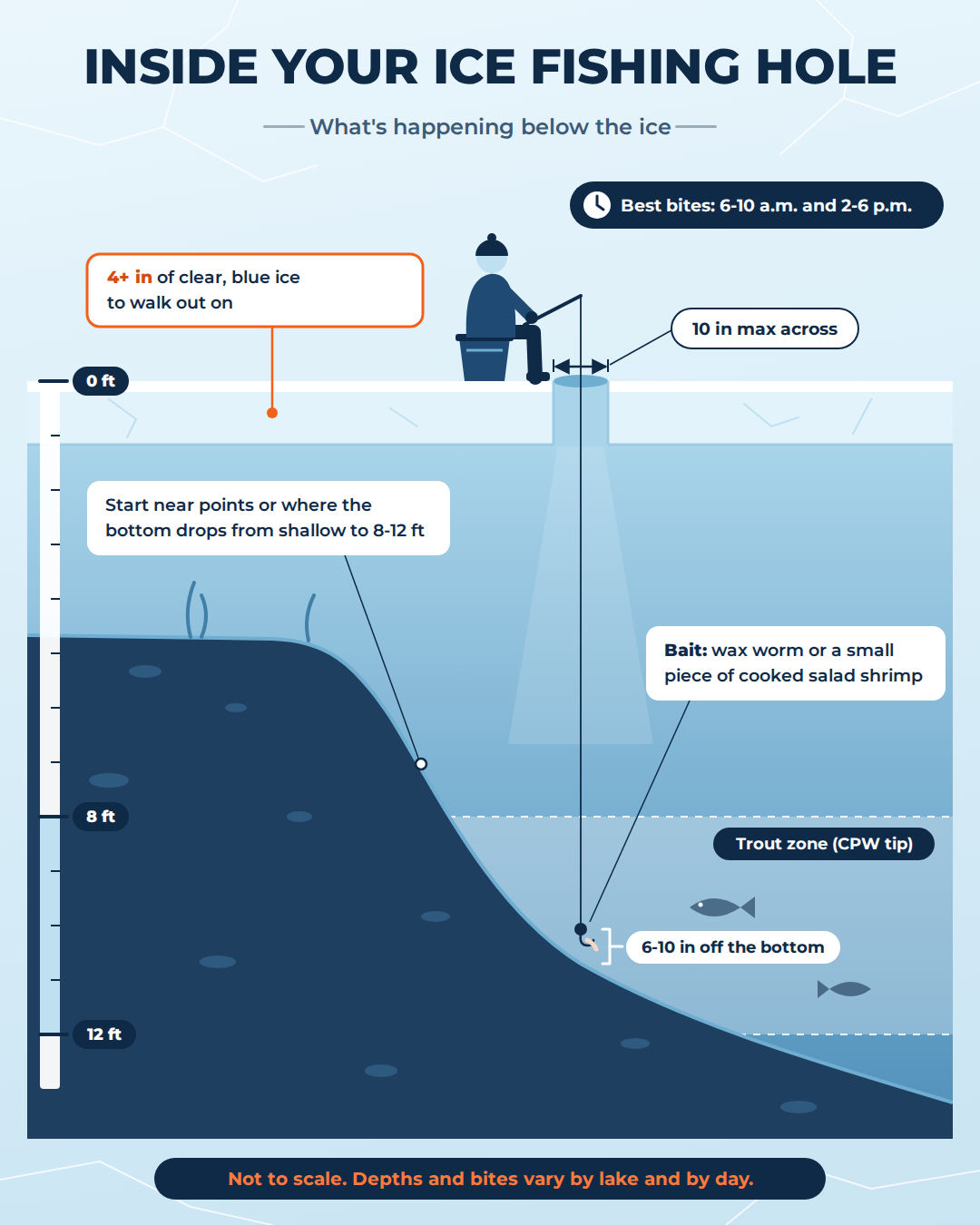
For bait, CPW suggests live wax worms or small pieces of cooked salad shrimp. Jig for about 30 seconds, then let the bait sit still for a minute. A shelter over your hole blocks the wind and keeps the hole from skimming over, so you can fish longer in comfort.
Colorado Ice Fishing Rules at a Glance
These statewide Colorado ice fishing regulations apply on every water open to ice fishing. Your lake may have more.
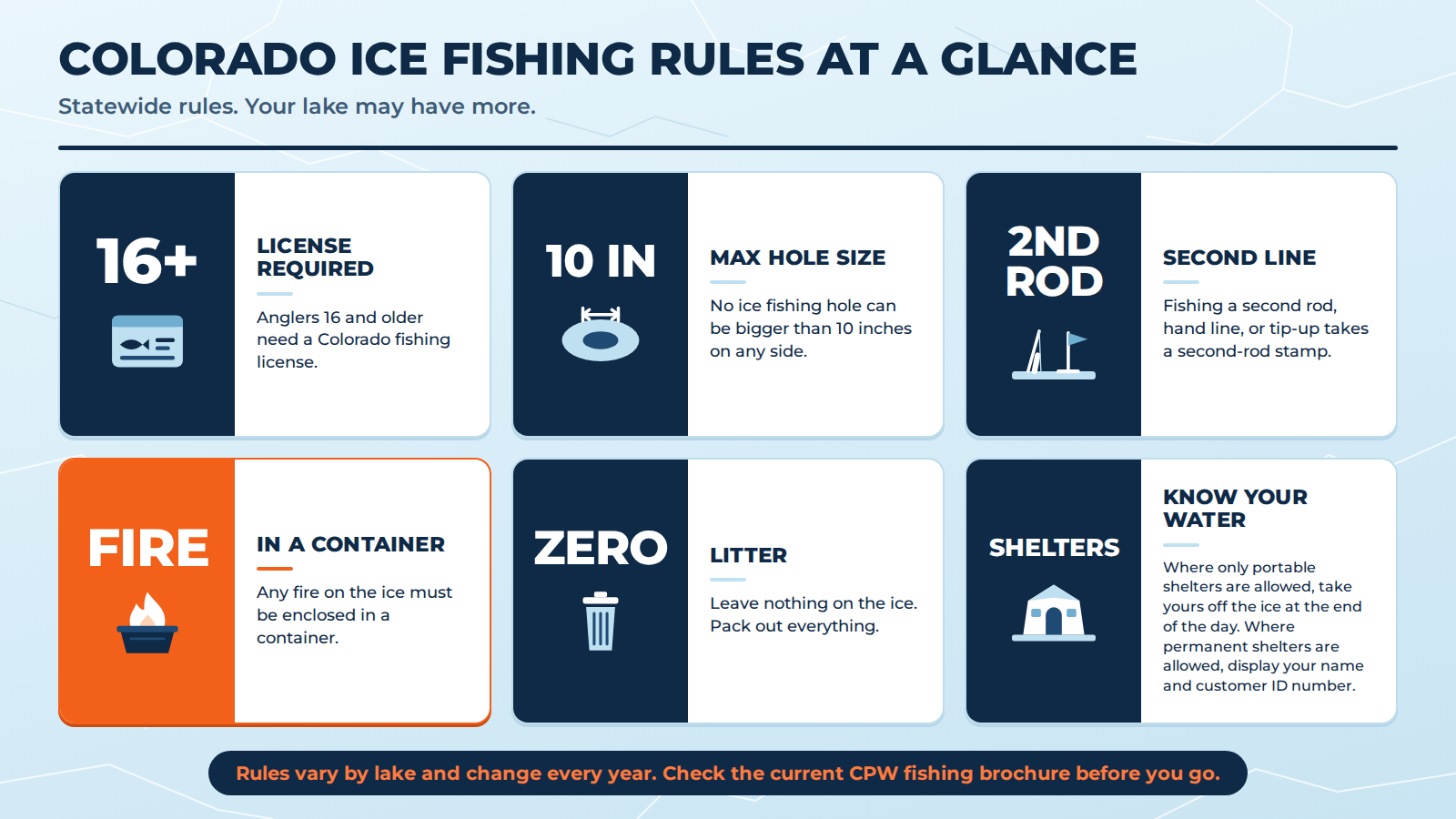
- Anglers 16 and older need a Colorado fishing license.
- Ice fishing holes may not exceed 10 inches in diameter, or 10 inches on any side.
- Fishing a second line requires a second-rod stamp.
- All fires on the ice must be enclosed in a container.
- No litter is allowed on the ice.
- Portable shelters must be removed at the end of each day. Where permanent shelters are allowed, they must display the owner's name and CPW customer ID number.
Always carry your license, test ice thickness before stepping out, and follow catch-and-release rules on designated waters.
Plan Your First Ice Fishing Day: A Simple Timeline
Here's a sample schedule for a first day on the ice:
- 7:00 AM:Check the weather and recent ice reports. Tell someone which lake you're fishing and when you'll be back.
- 8:00 AM: Arrive at the lake. Test the ice as you walk out, drill test holes, and set up your shelter.
- 8:30 AM: Drop your lines and settle in.
- 12:00 PM: Eat lunch, stay warm, and keep a line in the water.
- 3:00 PM: Pack up everything, including trash, and head home.
Times vary by season, weather, and fish activity. CPW's tips name 6–10 a.m. and 2–6 p.m. as peak trout windows, so arriving earlier or staying later can pay off — just leave enough daylight to walk off the ice. IceCast will add lake-by-lake ice reports to that 7:00 AM check when it launches in November 2026; join the waitlist to get it first.
Frequently Asked Questions
When does ice fishing season open in Colorado?
Colorado has no separate ice fishing season. Most Colorado waters are open to fishing year-round, so ice fishing begins whenever a lake forms safe ice, which varies by lake, elevation, and year. Some waters have their own closures or prohibit ice fishing entirely, so check the CPW Fishing Brochure for your lake.
How thick does ice need to be to ice fish safely?
Colorado Parks and Wildlife says 4 inches of good, clear ice can support one person walking, and to stay off ice that is 2 inches thick or less. Only travel on clear, blue ice, and drill test holes at no more than 30-foot intervals as you walk out.
Can you ice fish alone in Colorado?
Colorado fishing regulations do not require a partner, but fishing with someone is much safer. CPW advises making an emergency plan with your fishing party and letting friends or family know your plan before you head out.
Do you need a life jacket for ice fishing?
Wear one every time. A U.S. Coast Guard-approved life jacket or float suit keeps you afloat if you break through the ice, giving you time to use your ice picks and self-rescue.
What fish can you catch ice fishing in Colorado?
Rainbow, brown, cutthroat, and brook trout are the most common ice fishing targets in Colorado. Some reservoirs also hold lake trout, kokanee salmon, yellow perch, and northern pike. Trout count toward the statewide limit of 4 per day unless the water has a special regulation.
How much does a Colorado fishing license cost?
A 2026–27 Colorado resident adult annual fishing license costs $44.87, and a nonresident annual license costs $124.01. Anglers ages 18–64 also need a $12.76 Habitat Stamp once per year when buying an annual license. Anglers under 16 fish free.
For more on ice thickness, read how thick ice should be to walk on.
Ready to Go Ice Fishing in Colorado?
Ice fishing in Colorado is accessible, affordable, and rewarding. Get your license, gather your gear, learn the rules for your lake, and head out once the ice is safe this winter.
Author: IceCast Safety Team · Published: September 29, 2026. License prices, bag limits, and ice fishing rules verified against the 2026 Colorado Fishing Brochure, Colorado Parks & Wildlife license fees, and CPW ice fishing guidance. Ice safety guidance from Minnesota DNR.