
Ice fishing starts with the right gear. This guide covers the six categories of equipment every beginner needs: safety gear, drilling tools, fishing gear, shelter, clothing, and extras. We don't recommend specific brands — just the types of equipment you should bring and why each one matters.
Gear & Preparation
Ice Fishing Gear Guide 2026–2027: What You Need Before You Go
By IceCast Safety Team · August 31, 2026
⚠️ SAFETY FIRST: Before you buy any gear, learn how thick the ice needs to be. See How Thick Should Ice Be to Walk On?.
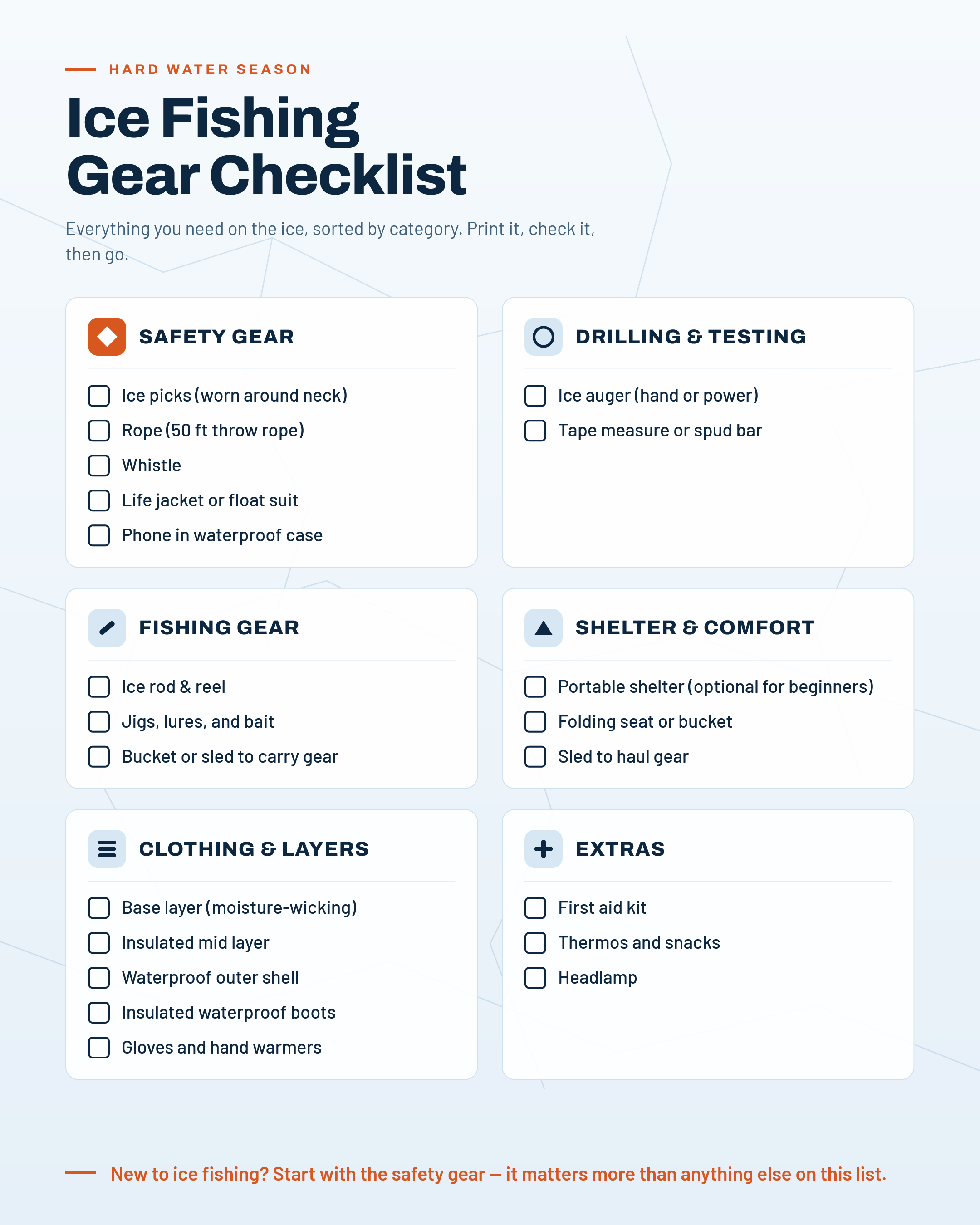
1. Safety Gear — The Most Important Category
Safety gear comes first. It keeps you alive if something goes wrong. Don't skip any of these items.
Ice Picks (or Ice Claws)
If you fall through the ice, ice picks let you grip and pull yourself out. They're small handles with sharp spikes. Keep them in your pocket or around your neck on a string.
Throw Rope
A 50-foot rope with knots or loops at the ends. If a friend falls through, you throw it to them. They grab it and you pull them to safety.
Whistle
A loud whistle signals rescue teams if you're in trouble. Sound carries far over ice and water. Attach it to your life jacket.
Life Jacket or Float Suit
A U.S. Coast Guard-approved personal flotation device (PFD) keeps you afloat if you break through. A float suit is thicker and warmer for winter. A regular life jacket works too.
Phone in a Waterproof Case
Keep your cell phone in a waterproof case or plastic bag in your pocket. If you need help, you can call 911.
Do not go ice fishing without safety gear. This gear saves lives.
2. What Gear Do You Need for Drilling and Testing?
Before you fish, you must measure the ice thickness. Bring drilling and testing tools.
Ice Auger (Hand or Power)
An auger is a drill that cuts through ice. Hand augers are cheap and light. Power augers are faster but heavier and need gas. Both work. Choose based on your budget and strength.
Tape Measure or Spud Bar
After you drill a hole, you need to measure the ice thickness. A simple tape measure or ruler works. Some people use a spud bar — a flat bar with marks — to stab the ice and read the thickness.
Strainer or Slotted Spoon
After drilling, ice chips fall into the hole. A strainer or small slotted spoon helps you clear them out so you can fish.
3. What Fishing Gear Do You Need?
This is the core fishing equipment. Adapt it based on the fish species in your lake.
Rod and Reel
A short ice fishing rod (24–30 inches) is easier to handle in a shelter. You can use a regular spinning reel or a small spooled reel made for ice fishing. Both catch fish.
Fishing Line
Light line (4–8 pounds test) works for most ice fish like bluegill, perch, and small trout. Heavier line for pike and walleye. Cold water makes line stiffer, so take this into account.
Jigs, Lures, and Bait
Jigs are small weighted hooks. Lures are small artificial baits. Live bait includes minnows or worms. Try different combinations to see what the fish want. Bring a variety.
Bucket or Sled
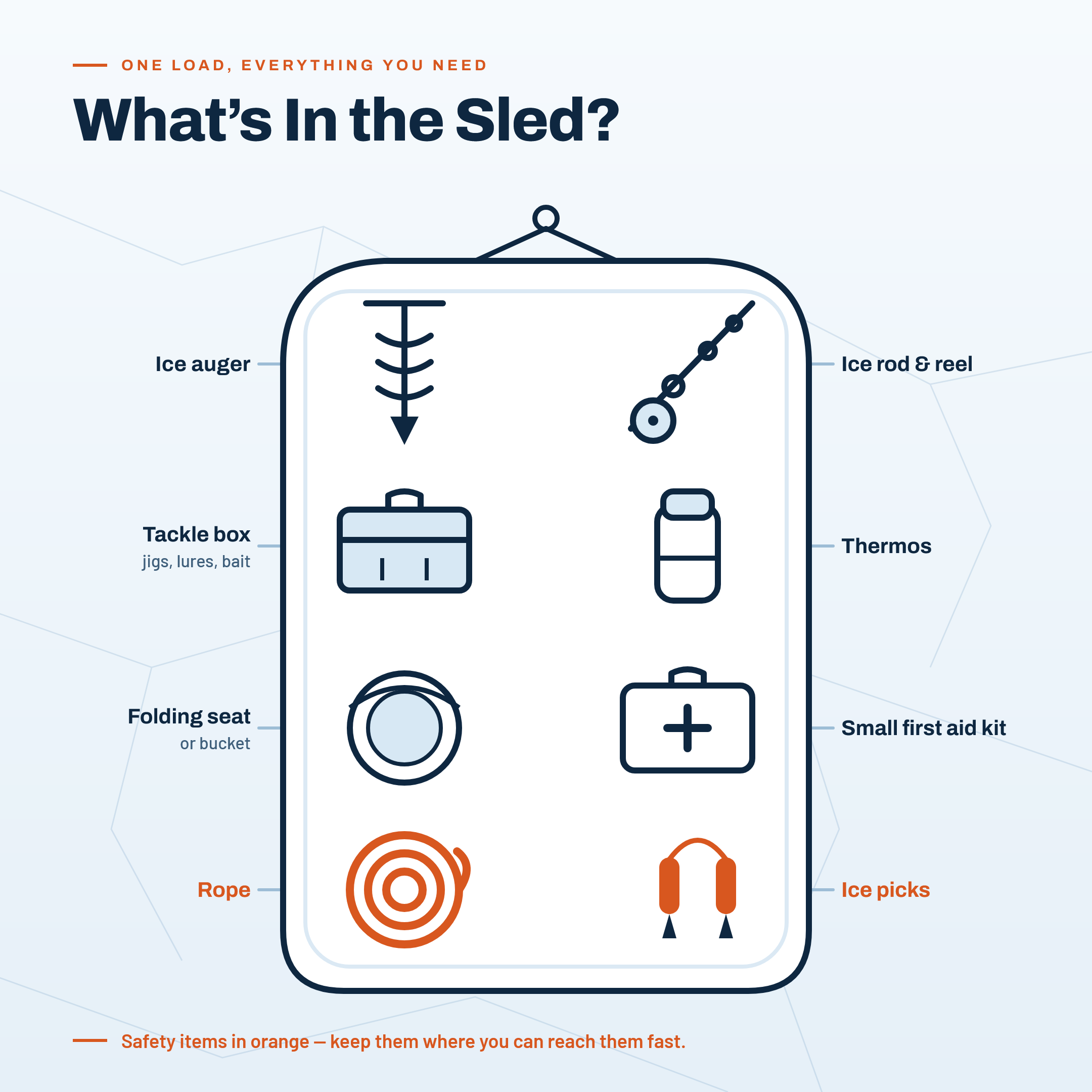
A 5-gallon bucket holds your gear and catches fish. A plastic sled carries heavier loads and doubles as a seat. Many anglers use both.
4. Shelter and Comfort — Make It Bearable
You'll spend hours sitting on ice. Shelter keeps wind and snow off you, and makes the cold less harsh.
Portable Ice Shelter (Optional)
A small pop-up shelter or tent keeps you warm and out of the wind. Some have one hole for your line, others have room for multiple people. Good shelters cost $50 to $200, but they make a huge difference in winter.
Folding Seat or Stool
A small folding seat lets you sit comfortably while you fish. Sitting on your bucket or sled gets uncomfortable fast. A $10 to $20 stool is worth it.
Sled
We mentioned this under fishing gear, but it's also your mobile shelter. You can drag it out, flip it on its side for a windbreak, and sit behind it.
Heater (Use with Caution)
A small propane heater in an enclosed shelter helps. But be careful — enclosed spaces and propane can be dangerous. Use only shelters designed for heaters and follow all safety steps.
How Should You Dress for Ice Fishing?
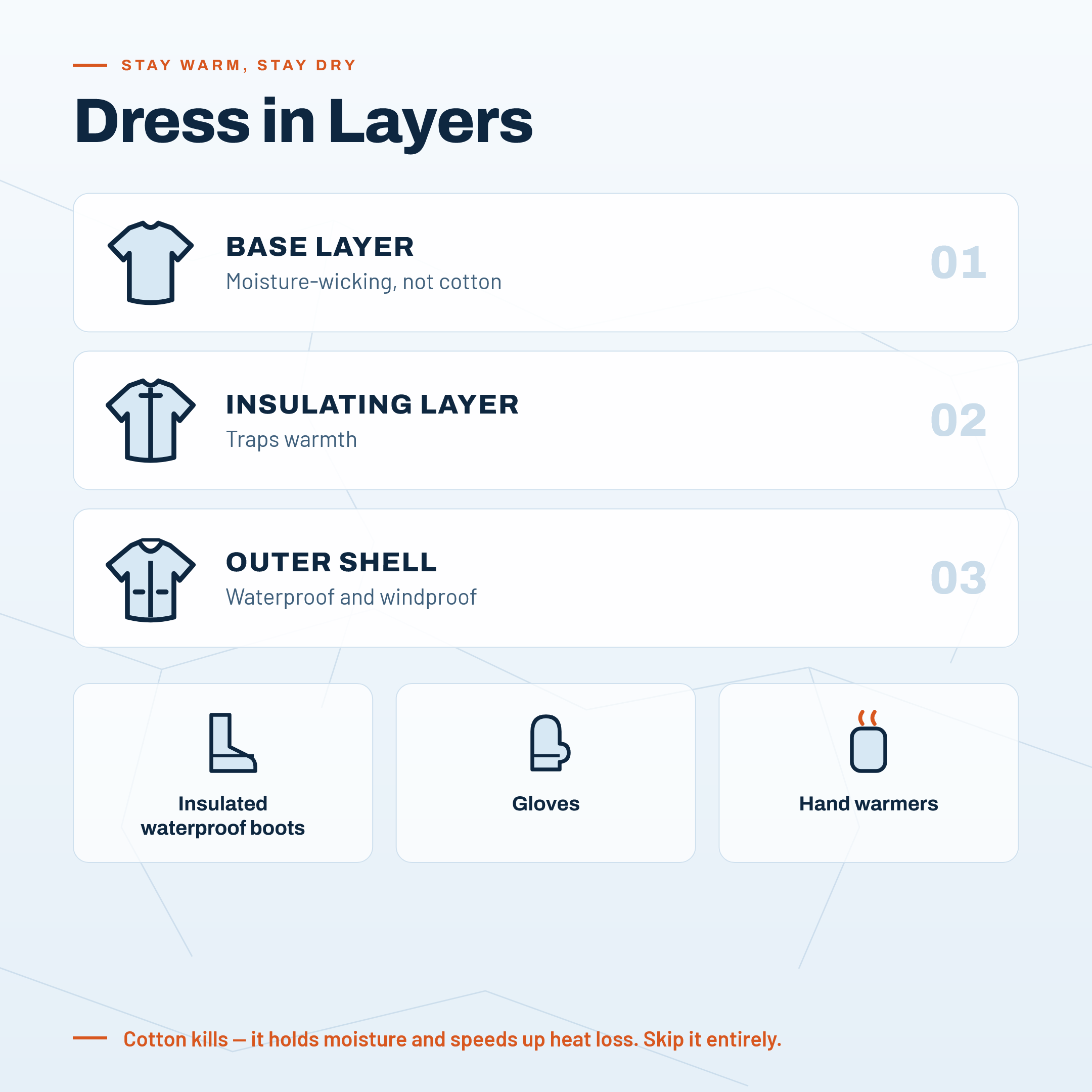
Dressing right keeps you safe. Use the layer system: base layer, insulating layer, outer shell.
Base Layer
Wear thermal underwear made from merino wool or synthetic material (not cotton). Cotton traps moisture and you'll get cold. The base layer touches your skin.
Insulating Layer
Fleece or wool jackets trap heat. This layer goes over your base layer. Add more layers as it gets colder.
Outer Shell
Wear a waterproof and windproof jacket and pants. Wind and snow break through cotton and fleece. A shell stops that.
Boots
Insulated boots rated for the temperature you'll fish in. Snow boots or ice fishing boots with thick soles keep your feet warm and dry.
Gloves and Hand Warmers
Thick insulated gloves or mittens keep your hands warm. Mittens are warmer than gloves but harder to use. Some people wear thin gloves under mittens so they can remove the mittens to fish. Chemical hand warmers (reusable or disposable) go in your pockets or gloves.
Hat and Face Protection
Heat escapes through your head. Wear a warm hat. A balaclava or neck gaiter protects your face and ears from wind.
6. Extras That Make a Difference
These items don't fit neatly into other categories, but they're useful to have.
First Aid Kit
Bring basic first aid supplies: bandages, pain relievers, and tweezers (for fishing hooks in fingers). A small kit weighs almost nothing.
Thermos and Snacks
Hot coffee or soup warms you from the inside. Bring high-calorie snacks like nuts, chocolate, or energy bars. Your body burns calories staying warm.
Headlamp or Flashlight
Sunrise and sunset on the ice are dim. A headlamp or small flashlight helps you see your line, lures, and fish. Bring extra batteries — cold drains them fast.
Towel or Cloth
Wipe ice off your rod and hands to stay dry. Moisture turns to ice in extreme cold and makes you even colder.
Start with the essentials. Add comfort items as you gain experience and learn what you prefer.
Complete Gear Checklist
Safety: Ice picks, throw rope, whistle, life jacket, waterproof phone case.
Drilling: Ice auger, tape measure or spud bar, strainer.
Fishing: Rod and reel, fishing line, jigs and lures, bait, bucket or sled.
Shelter: Portable shelter (optional), folding seat, sled, small heater (optional).
Clothing: Base layers, insulating layer, outer shell, boots, gloves, hand warmers, hat, face protection.
Extras: First aid kit, thermos and snacks, headlamp, towel.
Safety gear is not optional. Buy those items first. Everything else you can add later.
One Final Rule: Know the Ice Before You Go
Gear alone won't keep you safe. You also need to know the ice thickness at your lake. Bring all your gear, but always test the ice first. Always bring a partner. Always verify conditions locally.
For more on ice safety, read How Thick Should Ice Be to Walk On?.
DISCLAIMER:Ice fishing is a dangerous activity. People die every year falling through ice. This guide is educational only and lists gear types, not specific brands or products. It is not a substitute for local verification and professional guidance. Always bring a partner, test ice yourself, and follow guidance from Colorado Parks & Wildlife and Minnesota DNR. See our Terms of Service for full details.
Author: IceCast Safety Team · Published: August 31, 2026. Sources: Colorado Parks & Wildlife, Minnesota DNR.