Ice Safety for Walkers
How Thick Should Ice Be to Walk On?
By IceCast Safety Team · Updated August 31, 2026
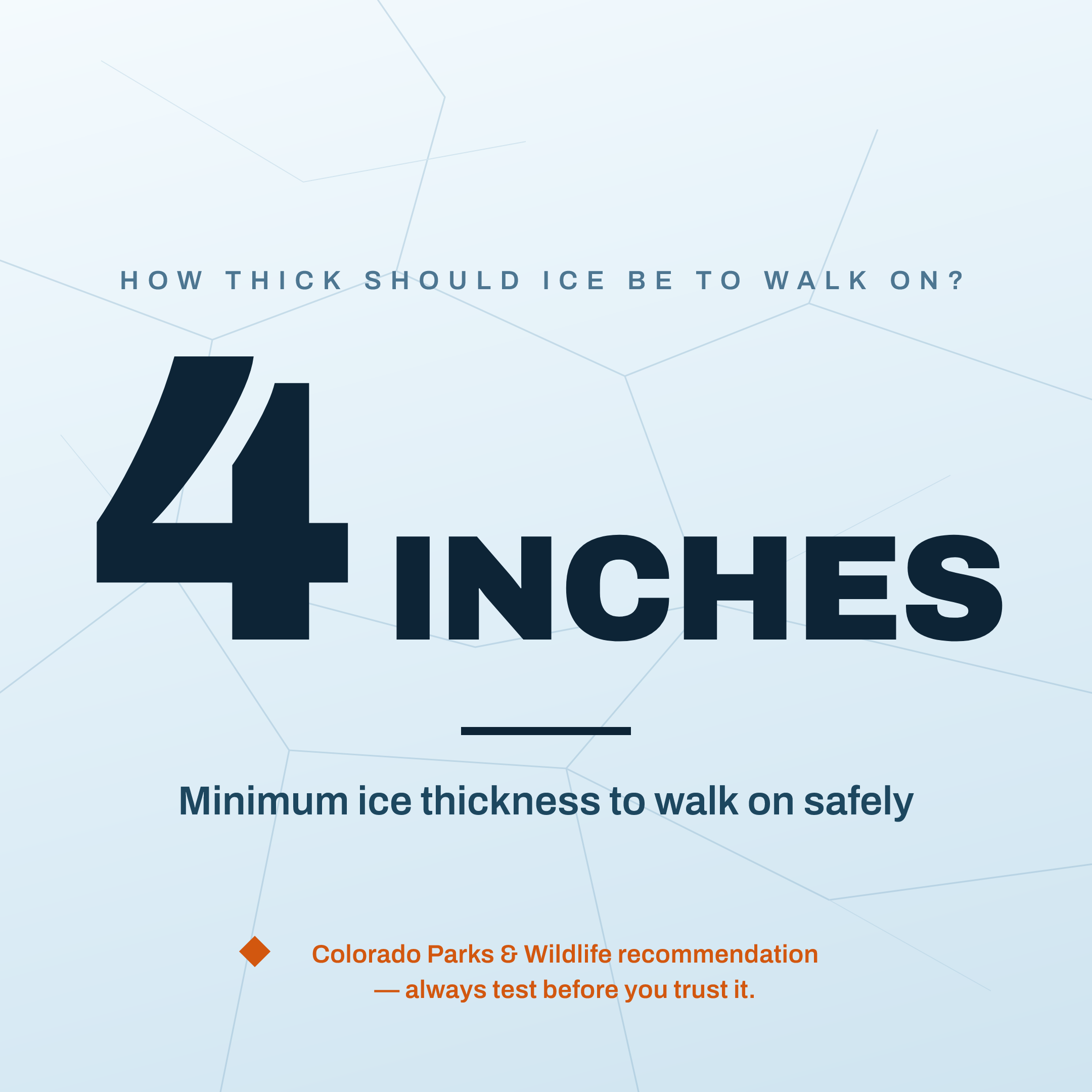
The answer is simple: you need at least 4 inches of solid, clear ice to walk on safely. But that's just the starting point. The color of the ice, where you are on the lake, and recent weather all matter too. Here's what you need to know before stepping onto the ice.
Before you head out, check real ice thickness reports from other anglers on your lake. IceCast tracks ice data from Colorado lakes so you can see what conditions are actually like before you go.
⚠️ WARNING: People die every year falling through ice. This guide is educational only. ALWAYS bring a partner. ALWAYS drill test holes. ALWAYS verify conditions locally. No guide can guarantee your safety. You decide the risk.
4 INCHES = Safe for One Adult Walking
Why 4 Inches?
Colorado Parks & Wildlife recommends 4 inches as the minimum safe thickness for one adult walking on new, clear ice. This is based on decades of ice-safety research.
Four inches means the ice is thick enough to hold your weight. But it's the bare minimum, not a target. If you have 5, 6, or 7 inches, that's even better.
If ice is less than 4 inches, stay off. Do not test it. Do not walk to your favorite fishing hole. Wait for it to thicken.
3 inches is not safe. 3.5 inches is not safe. Stick to 4 inches minimum.
Before You Walk On Ice
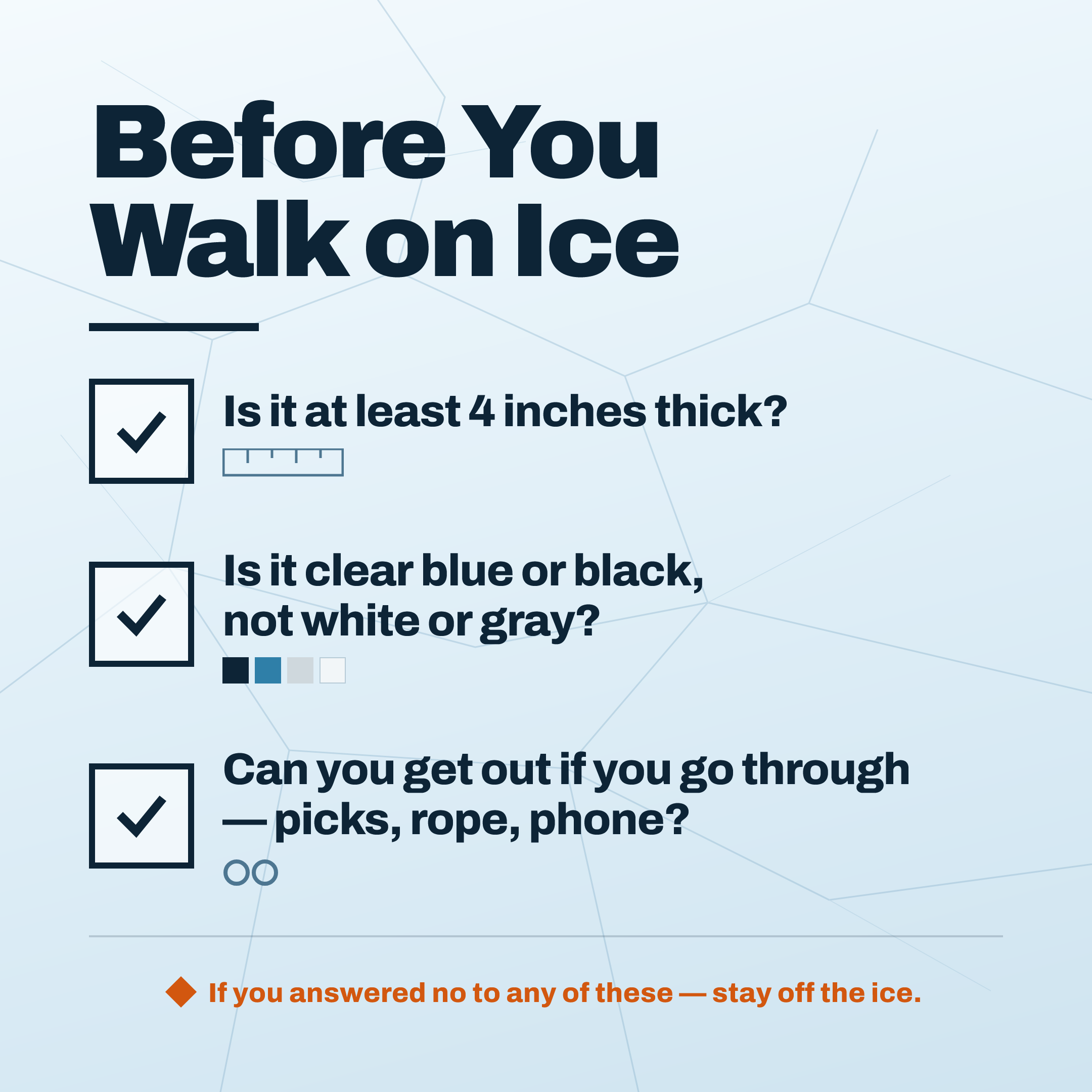
Four inches is the thickness rule. But you also need to check three other things before you step out.
Step 1: Test the Thickness
Bring an ice auger. Drill a hole right at the shore, then measure the ice. Use a tape measure or ruler. Repeat every 50 feet as you walk out.
If water rises into your drill hole, that's a warning sign. The ice underneath might be weak or hollow. Turn back.
Step 2: Check the Color
Clear ice is strongest. Dark blue ice is also good. Those colors mean the ice froze evenly and has no air bubbles.
White, gray, or bubbly ice is weaker. Do not trust it, even if it's thick. The bubbles mean the ice is spongy and can break suddenly.
Step 3: Bring a Partner and Self-Rescue Gear
Never walk on ice alone. If you fall through, you need someone to help pull you out. Your partner should stay on shore or carry a throw rope.
Wear a life jacket or personal flotation device. Keep a throw rope, ice picks, and a cell phone in your pocket. Minutes count when you're in cold water.
Always bring a partner. Always drill first. Always check the color.
What Does 4 Inches Really Look Like?
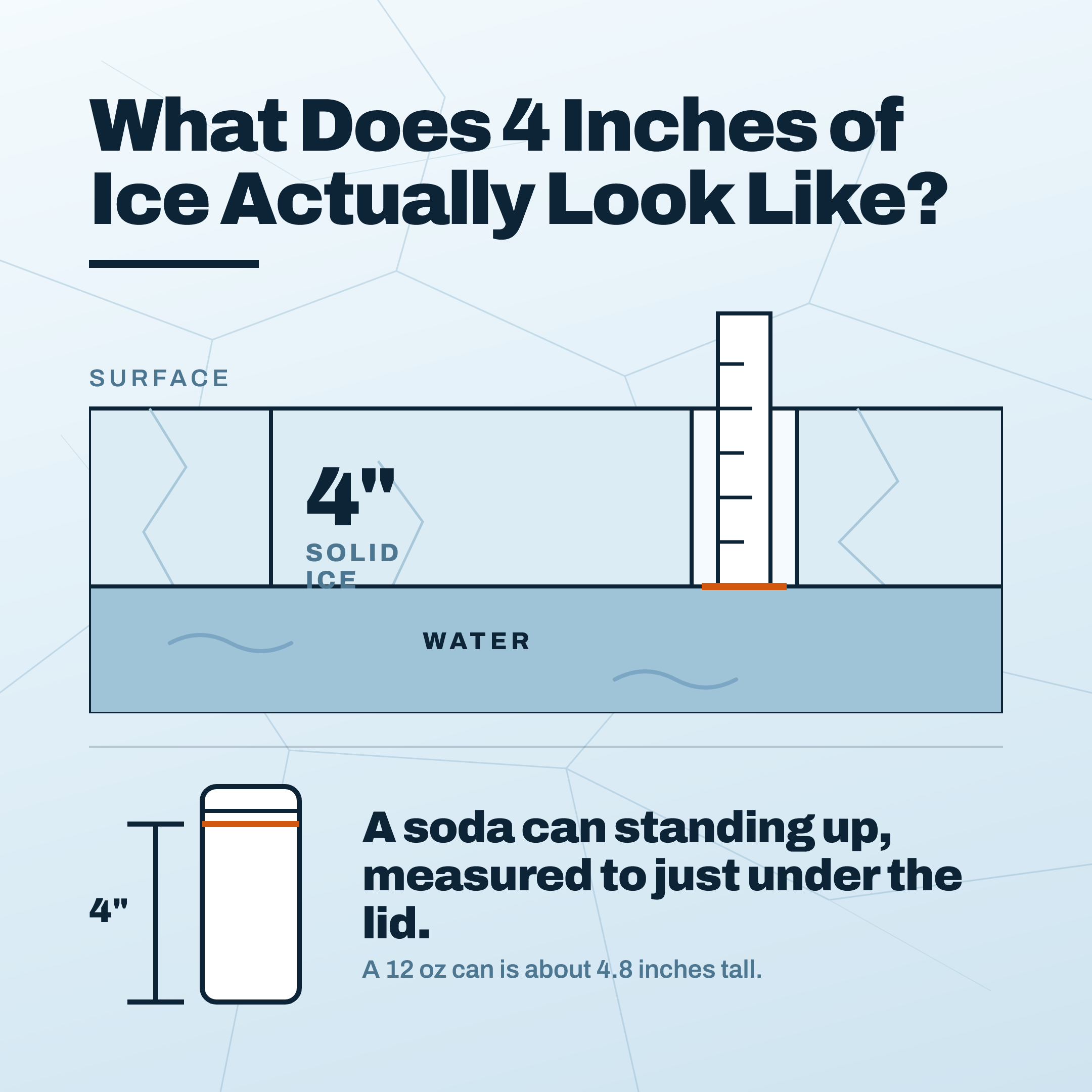
Four inches is the thickness of a standard soda can, plus a bit more. It's also about the width of your thumb. Hold up your thumb — that's how thick the ice needs to be.
Places to Avoid — Even With 4 Inches
- Near docks and piers: Metal and wood hold heat. Ice there is always thinner.
- Inlet streams and rivers: Moving water stops ice from forming evenly. Never walk near flowing water.
- Under heavy snow: Snow covers thin spots you can't see. Dark spots under snow often mean open water.
- Shore cracks and pressure ridges: Cracks mean stress. Ice can shift and open up.
Even 6 inches near a dock might not be safe. Location matters as much as thickness.
What If the Ice Is Only 3 Inches?
Don't walk on it. Not yet. Three inches is not close to safe. You might get 50 feet and fall through. You might make it 100 feet and then crack.
Three inches of ice takes only a few cold nights to turn into 4 inches. Wait. Check back in a week. The risk is not worth the hurry.
Weather Can Change Everything Overnight
A warm day above 40°F weakens ice fast. Rain or snow can hide thin spots. Wind can push ice around and create pressure ridges that snap under your feet.
Just because the ice was 4 inches yesterday doesn't mean it's still 4 inches today. Check again every time you go out. That's why IceCast users report their actual ice thickness from the lake — so you can see real conditions instead of guessing. The more anglers report, the better everyone's safety decisions.
Check the forecast. Warm weather weakens ice. Rain creates slush and weak spots. Check current ice reports before you leave for the lake.
Frequently Asked Questions
How thick should ice be to walk on?
At least 4 inches of solid, clear ice. That's the standard from Colorado Parks & Wildlife.
Can you walk on 3 inches of ice?
No. Stay off. Three inches is not safe for any adult.
Is 4 inches safe to walk on alone?
Four inches is the thickness you need, but never go alone. Always bring a partner and rescue gear.
How do you check if ice is thick enough?
Drill a hole with an auger or chisel and measure with a tape measure. Do this every 50 feet. Then share your reading with other anglers so they can make safe decisions too.
What color should safe ice be?
Clear or dark blue. Avoid white, gray, or bubbly ice.
Is ice near docks safe to walk on?
No. Ice near docks is always thinner and weaker than ice in open water.
Where can I find real ice thickness data for my lake?
IceCast tracks actual ice thickness reports from Colorado anglers. Check the app before you go to see what other people measured on your lake.
DISCLAIMER:Ice fishing and walking on ice are dangerous activities. People die every year. This guide is educational only and is not a substitute for local verification. Always bring a partner, test ice yourself, and follow guidance from Colorado Parks & Wildlife and Minnesota DNR. See our
Terms of Service for full details.
Author: IceCast Safety Team · Last updated: August 31, 2026. Sources: Colorado Parks & Wildlife, Minnesota DNR.
