
The golden rule: solid ice at least 4 inches thick will safely hold a walking adult. But thickness is only part of the story. Where the ice sits on the lake, how clear it looks, and recent weather all matter too. Here's what Colorado anglers need to know before stepping on any ice this winter.
Ice Safety Guide
How Thick Does Ice Need to Be to Walk On?
By IceCast Safety Team · Updated August 7, 2026
⚠️ WARNING: Ice fishing is dangerous. People die every year from falling through ice. This information is educational only. ALWAYS verify ice conditions locally before going on any ice. Drill test holes. Check ice clarity. Talk to local authorities. No app, guide, or report can guarantee your safety.
What's the Minimum Ice Thickness to Walk On?
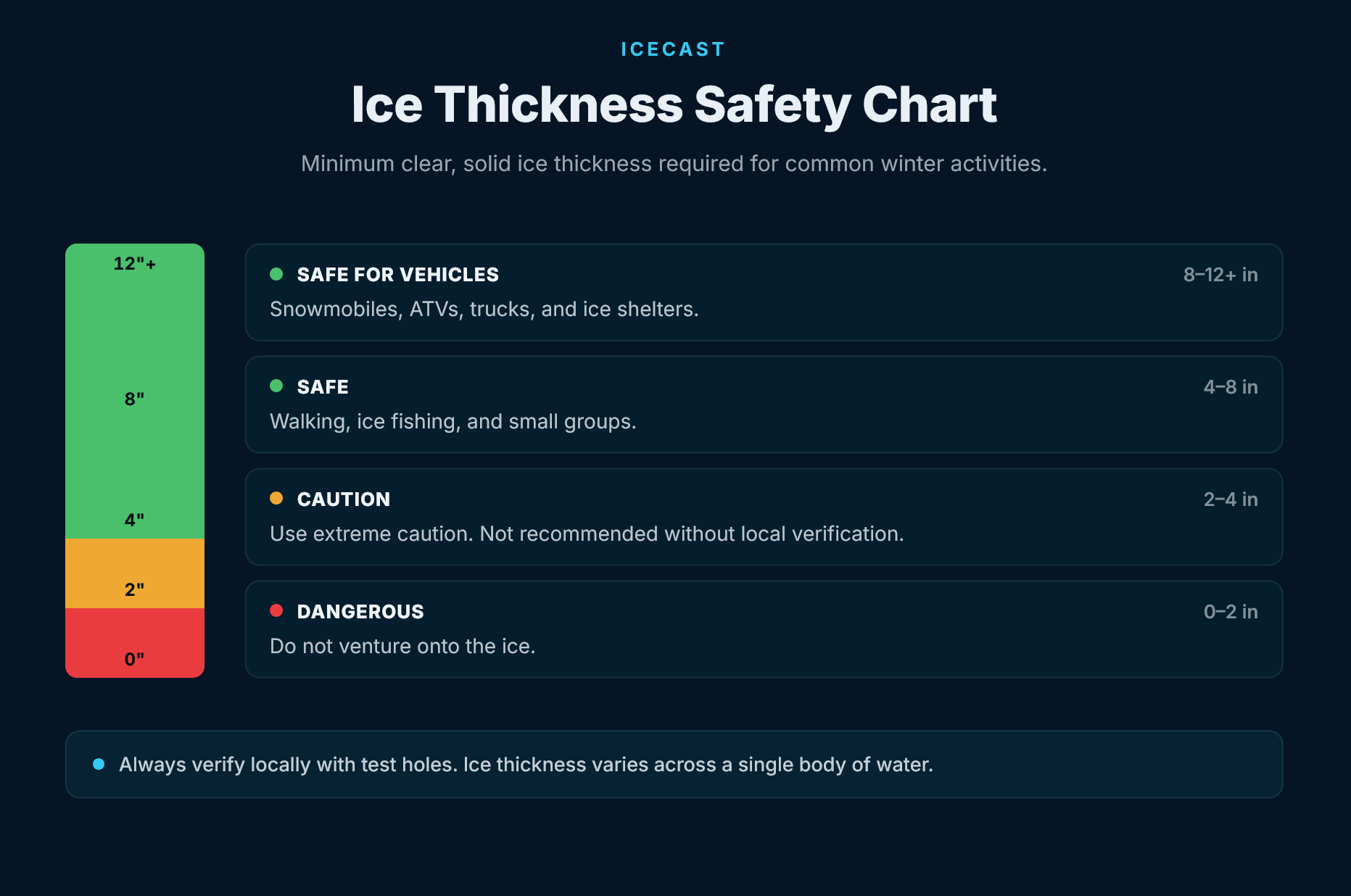
A single adult needs at least 4 inchesof solid, clear ice to walk on safely. That's the number recommended by Colorado Parks & Wildlife (CPW) for new, clear ice.
Four inches is the bare minimum, not a target. More is always safer. If the ice is less than 4 inches, stay off.
Always test the ice yourself. This is general information only.
What About Groups and Families?
A group of 2 to 4 people needs thicker ice — about 5 to 7 inches. More people means more weight pressing down in one area.
Spread out instead of standing close together. This spreads your weight across more ice. Groups always need thicker ice than one person walking alone.
Never assume ice is safe just because others are walking on it.
Vehicles and Ice Fishing Shelters
Different loads need different ice thickness:
- Snowmobiles and ATVs: 5 to 7 inches
- Trucks and vans: 8 to 12 inches
- Ice fishing shelters: 6 to 8 inches minimum
Bring an auger and drill test holes every 50 feet.
Why Ice Thickness Alone Isn't Enough
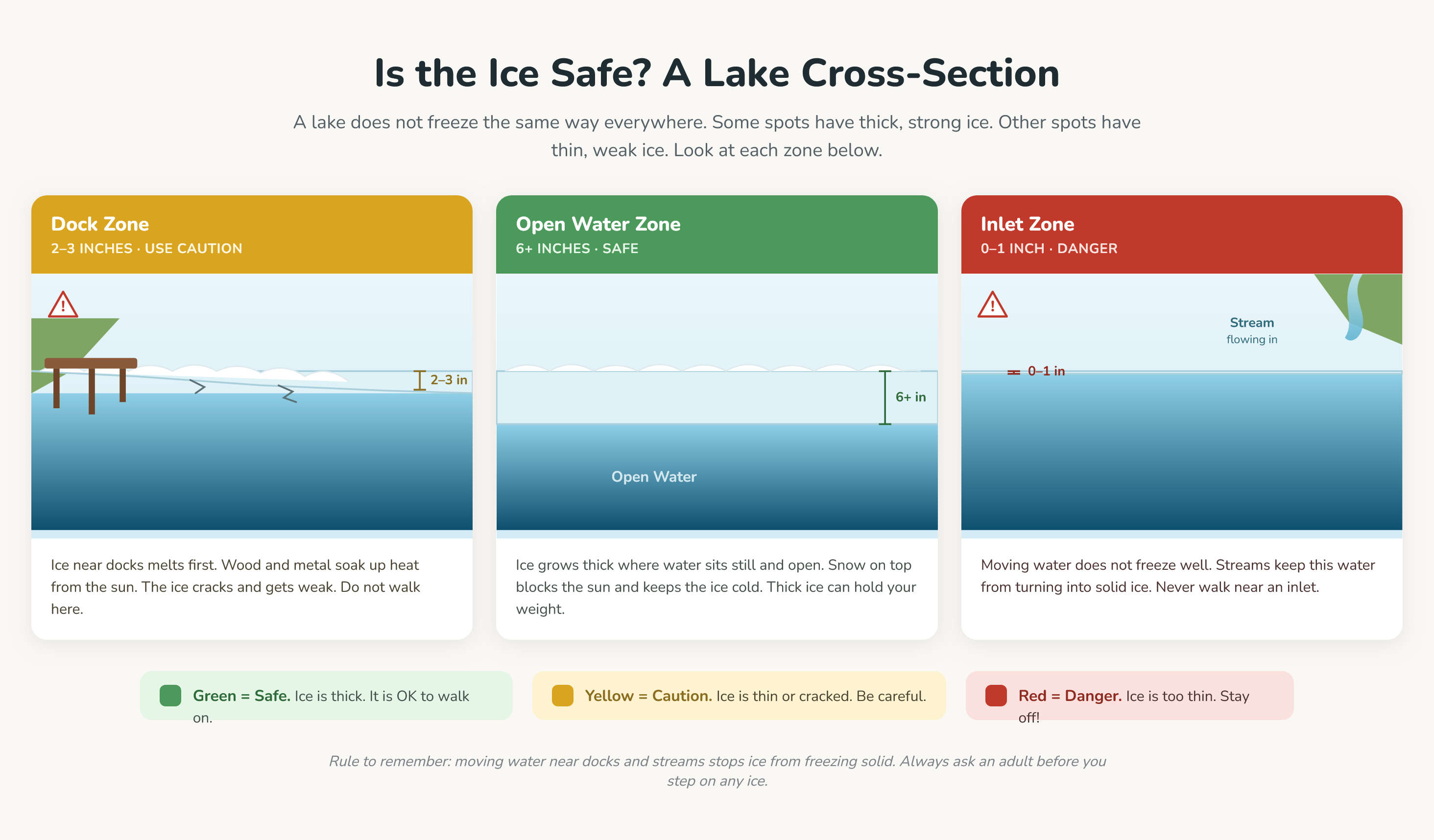
- Clear, solid ice is much stronger than white or bubbly ice, even at the same thickness.
- Ice near docks, inlets, and moving water is always thinner. Moving water stops ice from freezing evenly.
- Weather changes ice overnight. A warm day or heavy snow can weaken ice fast.
App data is NOT a substitute for local verification.
Always Verify Conditions Locally
- Drill test holes before stepping onto new ice.
- Check for soft ice or water rising in your test hole.
- Look at the ice color — clear is good, bubbly is risky.
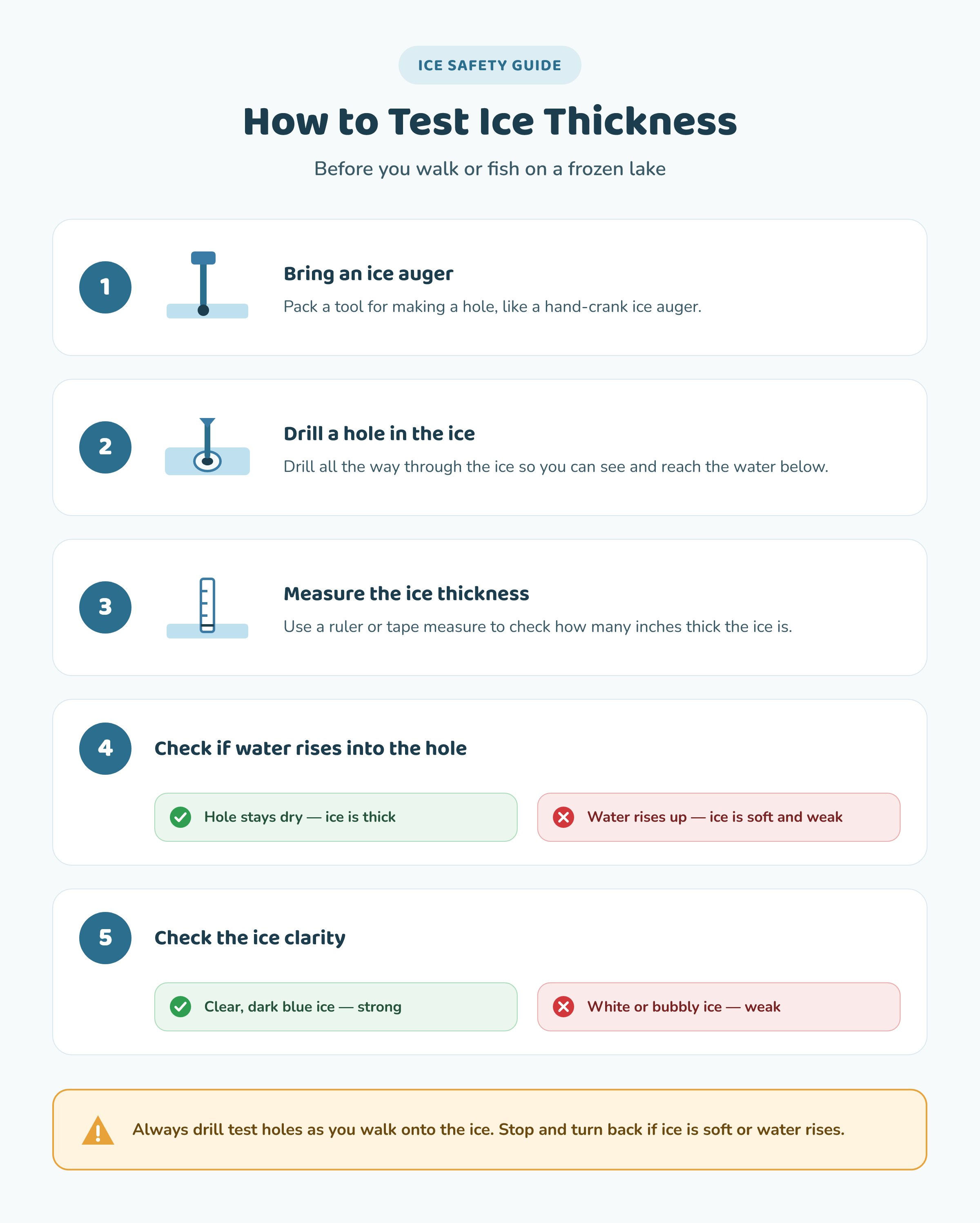
Stop and turn back if anything feels unsafe.
How IceCast Helps (But Can't Replace Local Checking)
IceCast tracks ice thickness reports from anglers, marinas, and local sources across Colorado lakes. Use our data and methodology to see what other people are reporting before you head out.
But always do your own local check when you arrive — conditions can change fast, even on the same lake.
IceCast launches November 2026. Join the waitlist to get early access.
IceCast informs. YOU decide. Always check locally.
Frequently Asked Questions
How thick does ice need to be to walk on?
At least 4 inches of solid, clear ice for one adult, per Colorado Parks & Wildlife guidance.
What's the minimum ice thickness for ice fishing?
Plan for at least 4 inches for foot traffic, and 6 to 8 inches if you're setting up a shelter.
Why is ice near docks thin?
Moving water near docks, inlets, and channels keeps ice from freezing evenly, so it's often much thinner than ice out in open water.
How do I test ice thickness?
Drill a test hole with an auger and measure the ice with a tape measure or ice chisel. Do this every 50 feet as you go.
What should I do if water rises in my drill hole?
Turn back right away. Rising water is a sign the ice underneath may be too thin or unstable.
Is clear ice always safer than white ice?
Generally yes. Clear, solid ice is stronger than white, gray, or bubbly ice, even at the same thickness.
DISCLAIMER:IceCast provides data to inform decisions, not to replace local verification. We make no guarantee of accuracy, completeness, or current validity. Ice conditions change fast. Always follow guidance from Colorado Parks & Wildlife and the National Weather Service. See our Terms of Service for full details.
Author: IceCast Safety Team · Last updated: August 7, 2026. Sources: Colorado Parks & Wildlife, National Weather Service, and NOAA.